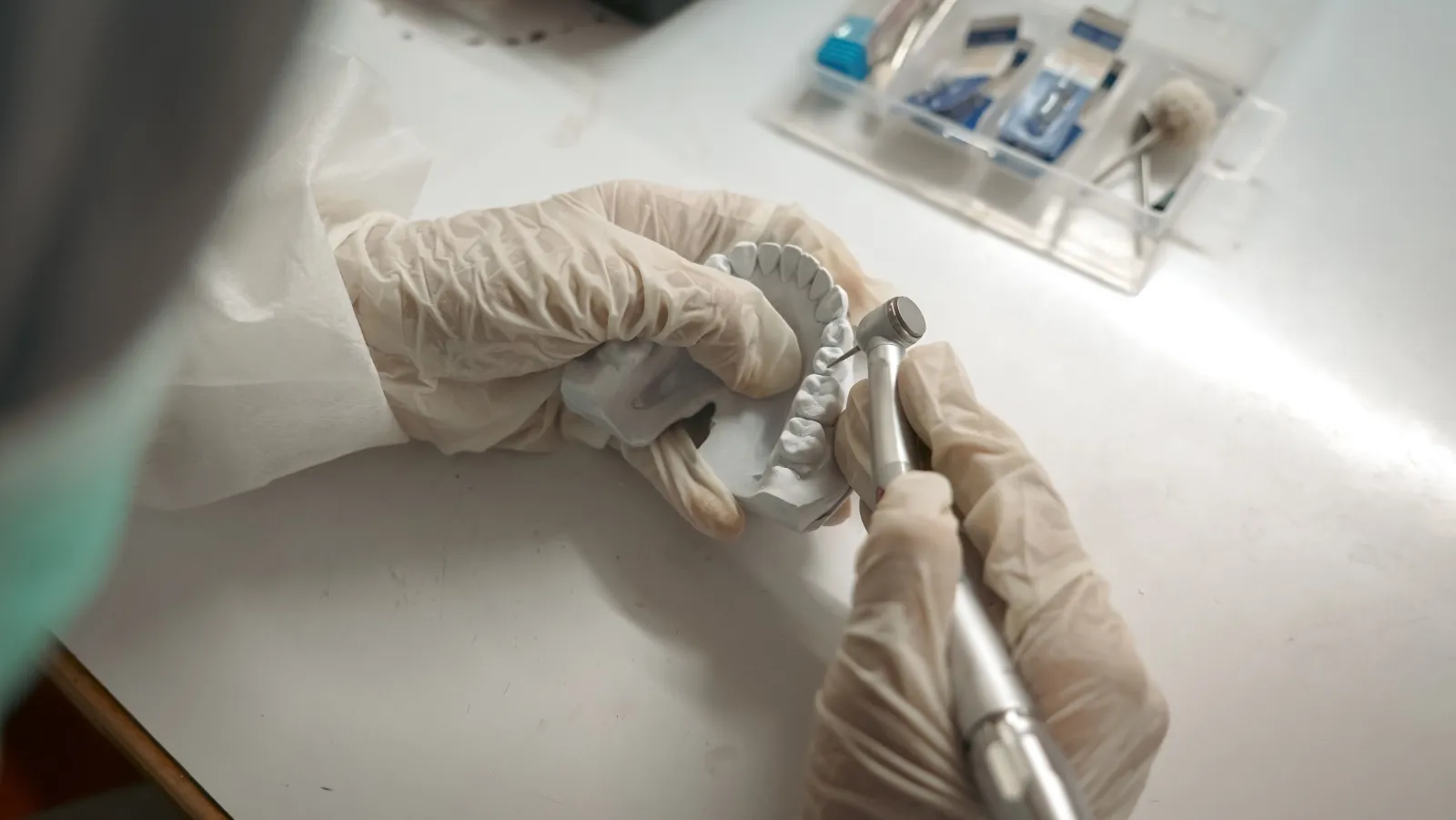
A dentist recommends a crown when a tooth has lost so much structure that a filling can no longer hold what is left together. A crown, sometimes called a cap, fits over the whole tooth above the gum line. Dental crown cost follows from four things: the amount of tooth left, the material, the lab work, and any build-up beneath it. An exam shows what your tooth needs, so a total quoted before one is a guess.
Why does a dentist recommend a crown instead of a filling?
A filling replaces the part of a tooth that decay removed. It does not hold the rest of the tooth together. When the hole is small, the walls around it are thick enough that this does not matter. When the hole is large, the walls left standing are thin, and a filling can press outward against them when you bite.
What chewing does to a tooth with little left
Thin walls can crack under that load. The American Association of Endodontists says that, unlike a broken bone, the fracture in a cracked tooth will not heal. Chewing keeps working on the crack, too. The pieces move against each other, and the pulp, the nerve tissue inside the tooth, can become irritated.
What a crown does about it
A crown goes around the outside of the tooth instead of sitting inside it. It holds the walls together and spreads the force of each bite across the whole tooth, so no single thin wall carries it alone.
Without that protection, a crack can extend into the pulp. The same source says the tooth can then be treated with a root canal and a crown to protect the crack from spreading. Some cracks keep progressing even after treatment. Our page on root canals explains that treatment.
Why do dentists push for crowns?
A crown is a bigger step than a filling, so it is fair to wonder. The American Dental Association says a crown can strengthen a tooth with a large filling that has too little tooth left to hold it. It can also protect a weak tooth from breaking or restore one that is already broken. Other uses are to attach a bridge, cover a discolored or badly shaped tooth, or cover a dental implant. The ADA adds: "If your dentist recommends a crown, it is probably to correct one of these conditions."
Teeth that have had a root canal
A tooth that has had a root canal is a common case. The decay or injury that made the root canal necessary removed tooth, and so did the opening the dentist made to clean the canal. Afterward, the American Association of Endodontists says, the tooth is restored with a crown or filling for protection. It holds what is left together under chewing force.
What a crown costs the tooth
To fit a crown, the dentist shapes the tooth down on every side to make room for it. Enamel that is removed does not grow back. So a crown is not the first choice for a small cavity; it fits a tooth where leaving it alone is the bigger risk.
Questions worth asking
Ask what is wrong with the tooth, and ask to see it on the X-ray. Ask what happens without a crown, and whether a smaller repair would hold.
What decides dental crown cost?
Four things mostly set the cost.
How much tooth is left, and what has to happen first
The more of the tooth is gone, the more work sits under the crown. A tooth with too little left to grip a crown needs a build-up first. That is material added to rebuild the core, so the crown has something to hold. A tooth with decay near the nerve needs treatment before any crown goes on. Each of those steps is separate work.
The material
Crowns are made of ceramic, porcelain, resin or metal, and some combine two layers. Each material has a tradeoff: tooth-colored ceramic blends into a smile, which matters most on front teeth. Metal alloys stay strong in thin layers, which suits back teeth that take the heaviest chewing. The material affects both the price and which teeth the crown suits.
The lab work
A lab-made crown starts from a scan or impression of your prepared tooth. A technician matches the crown's shape to your bite and its shade to the teeth beside it. A front tooth often takes more of that matching, which is more technician time. A temporary crown protects the tooth until the final one is back.
What does dental insurance usually do with a crown?
Plans vary widely, so treat this section as a set of questions to ask, not an answer about your plan.
Major work, not basic
Many plans class a crown as major work. That tier can pay a smaller share than the tier for exams and fillings, so ask which tier your plan puts a crown in.
Waiting periods and the yearly maximum
Some plans make you wait before they pay for major work. Most plans also have a yearly maximum, the most they pay in one plan year across all your dental work. A crown, a build-up and any other treatment in the same year draw on the same maximum.
Build-ups, materials and replacements
Ask whether the plan pays for the build-up separately. Ask whether it pays for the material your dentist proposes or only for a less costly one. If the crown replaces an older one, ask whether the plan limits how often it pays to replace a crown on the same tooth.
Checking your own plan
Hanover Dental Care works with many dental plans, and the only reliable answer about yours comes from checking it. Call (804) 544-2499 before your visit and the team will check it for you.
Why does the quote come after the exam?
An X-ray shows how much tooth remains and how close decay sits to the nerve. The exam shows whether an old filling has failed underneath. Those findings decide whether you need a build-up, a root canal first, or the crown alone.
A consult for crowns and bridges is where the exam happens and where you get a number for your case. For the part insurance does not cover, the practice offers financing through Cherry, CareCredit and Sunbit, plus an in-house savings plan.
Think a tooth might need a crown? Call Hanover Dental Care in Montpelier at (804) 544-2499, or send a message through our contact page.